Monday, March 19, 2007

Snow Day


That's right, it snowed here in Amman last week. Big, white flakes fell from the sky for most of the day, and although most of it melted soon after it hit the ground, school was cancelled and we had an extra day at home. In fact, most of the cars on our block didn't move all day, probably meaning most of our neighbors stayed home too. The picture above shows the results of our day of snow, and although it is pretty meager from our Minnesota standards, it was enough to disrupt the normal rhythm of life here, and even enough to provide us with a little bit of extra excitement.

Saturday, March 03, 2007

Wild Cats

I recently read an article in our hometown newspaper about the large and increasing number of wild cats in the metropolitan area of Minneapolis and St. Paul. According to the article, studies show that between half a million to a million such cats are roaming the area, creating nuisance issues and potentially spreading disease. The article even told the story of one such wild cat that entered a women's home and, when discovered, took a swipe at her. Oh my! The article went on to discuss the solutions being bandied about for the resolution of the problem, which included bringing the cats to animal shelters to give away or, if they were not taken, to euthanize; trapping, neutering and then releasing them; or just shooting them. It didn't say if there would be a "cat season" or not.

This got me thinking about our own wild cat problem here in Amman. Here, cats roam every street like packs of wild dogs, dig for leftover food in garbage cans, sleep on abandoned furniture or empty dirt lots, produce new offspring several times each year, and occasionally disturb the peace with their fighting. They're like squirrels in Minnesota in their ubiquity, except with much more personality. No matter how wild they are, when you walk by them they seem to look at you longingly--occasionally meowing--hoping for a bit of human contact, but deep down, knowing that they should probably keep their distance. Also, since--like snowflakes--no one cat looks exactly like another, you start to recognize the various cats on your street, notice the new ones that sometimes come along, and wonder where the old ones are if you haven't seen them for a few days. Anyway, there are a lot of cats here. A lot.

So I wondered exactly how many wild cats we have here, and did an internet search to see if I could find out. Needless to say, however, there was no such information available online. I guess that's not surprising. There were a few blogs from various people here on the subject, but I doubt that any study has been done to determine the number of wild cats living in the city.


A cat on the dumpster outside our apartment.

Tuesday, February 27, 2007

Church Attack in Sudan

Recently we found out that the Anglican Cathedral in Khartoum, Sudan was attacked by police during the New Year's Eve service two months ago. We learned about this not from a newspaper report, the BBC or the internet, but from our friend, who had gone home to Sudan from Jordan to spend Christmas with his family for the first time in six years--and who just happened to be in the church when the attack happened.

First, he said, two canisters of tear gas were fired into the front veranda of the church. Then, the police stormed into the church and fired two more. Finally, as the 500 or so people inside were panicking, they fired still two more. Our friend was sitting in the front of the church near the pulpit--although he usually would sit in the back, he said--where everyone of course rushed to escape the gas. Those in the front, he said, scrambled to open the doors to the outside there, taking care to make sure the crowd left the building in single file to avoid trampling. In the end several people incurred only minor injuries--although according to our friend one person needed to have his hand amputated because of major burns incurred. A canister did land near the Christian vice-president of the country who was in attendance, and our friend had to spend some time wiping away the tears produced by the gas.

According to our friend, the official explanation from the police for this attack--an explanation confirmed in this article--was that a fight had broken out near the church in which someone was stabbed. The stabber--according to the police--then ran into the church, and the police followed. Our friend believes the story was made up--an excuse to attack the church. After all, he said, no stabber was ever found, nor was any stabbing victim, something relayed in an article on this Christian news website. Even if the incident in question really did occur, storming the church with tear gas in order to flush out the attacker seems to be a bizarre tactic. Of course, in researching this attack online we discovered that similar attacks by the police on Christians in Khartoum have taken place in the past, one of which is detailed here in this release from Amnesty International.

The Bishop of Khartoum discussed the attack in a statement to other Anglican churches around the world. The incident is a reminder of the tenuous position of Christians in Sudan, and--along with the past destruction of the south during the long civil war and the current pillaging of the people and places of Darfur in the west--is another example of the obstinacy of the Sudanese government. It is also probably another reason why so many of our Sudanese friends here say that going home from Jordan--a country with its own challenges--will be a difficult transition.

Sunday, February 04, 2007

Tunisia: Kairouan and Tunis

After finishing in Gabes, we began the final portion of our North African journey. From Gabes we took a louage--a mini-van taxi with seven or eight passengers--back to Sfax, and from there we rode another louage about two hours to Kairouan, a city west of Sousse in north central Tunisia. We had heard a lot about these louages during our short time in Tunisia regarding the speed of their drivers and their accident rate, but we had no problems. At one point during the ride to Kairouan I did wake up from a nap and notice the van was really bouncing because of our speed and perhaps the erratic driving of our driver, but instead of worrying I just decided to go back to sleep.

Kairouan has a population of about 120,000 and is one of the holiest cities in Islam. Founded in the late seventh century, it is the oldest Islamic settlement in Tunisia, and has the oldest mosque in North Africa, with the world's oldest minaret. Like most other cities we visited on our trip, Kairouan has an old city surrounded by walls as well. Although the original walls of the city were built in the late eighth century, most of the current walls are from the 18th century. We spent one night here.

Finally, the last part of our journey was spent in Tunis, the capital of Tunisia, where we arrived after a four hour louage trip from Kairouan. The population of Tunis is about 700,000, and it of course includes an old city, which was founded in the late seventh century not long after the Arab conquest of the area. Tunis had a European flavor as well, with a long, pedestrian friendly main boulevard lined with sidewalk cafes and restaurants filled with people. From Tunis we took day trips to the picturesque seaside village of Sidi Bou Said--which actually had a Greek island type feel--and the ruins of Carthage, an ancient city where the important Christian theologian Augustine lived for a time.

After all this, it was finally back to Amman.


A gate into the old city of Kairouan.


Carpets hanging from a shop in Kairouan. The city is the carpet capital of Tunisia.


An alleyway in Kairouan, and another biker.


Rows of Fez--the national headgear of Tunisia.


A synagogue in Tunis. Tunisia still has a tiny Jewish community.


A group of women in Tunis.


A statue from the museum in Carthage.


Annamarie posing in Carthage.


Looking out to the Mediterranean Sea in Sidi Bou Said.


A cat sleeping outside a doorway in Sidi Bou Said.

Saturday, February 03, 2007

Tunisia: The Desert Drive


From Gabes we rented a car and spent two days driving further south and west, making our way to the edge of the Sahara desert before heading back to Gabes. On our first day we drove south through a rocky desert landscape dotted with palm trees, small brush and the occasional oasis, distinguished by a small island of green surrounded by the sea of brown around it. The region is heavily populated by Berbers--the original, indigenous inhabitants of North Africa before the Arab invasions--and we also drove past and to many old Berber fortresses and villages for which the area is famous. The picture above is of a Ksar--a fortified Berber granary--examples of which are found throughout the region.

Since this part of Tunisia was used for the filming of parts of the Star Wars films, our trip included visiting two sites that were used, and which have now become destinations in themselves. This involved driving through the town of Tataouine--also the name of the home planet of Luke Skywalker--and then spending the night in the village of Matmata in his boyhood home, which was a Berber home and is now a very low budget hotel. We wouldn't recommend staying there, though, as the facilities were shabby and somewhat gross. As Annamarie said, they don't have too much incentive to keep it nice, "because they know that dorks like us will come anyway."

From Matmata we drove to the town of Douz, located on the edge of the Sahara desert. Most of the trip consisted of driving in a straight line through more rocky desert, until the hard topography grew progressively more sandy as we drew closer to Douz. Douz itself is an oasis--the largest in Tunisia--with nearly half a million palm trees. We spent our day there exploring the town, eating lunch and riding camels just a bit into the Sahara. Then we drove back to Gabes.


The sign at the city limits of Tataouine, a city of 60,000 that is also the name of Luke Skywalker's home planet.


A Berber stronghold. With the exception of the white mosque in the middle--a recent addition--the buildings all blend in with the surrounding rock.


The courtyard of Luke Skywalker's home, with various movie props still in place. It was at one time the courtyard of a Berber home. There are rooms all around the open space in the middle--all dug into the rock--and large tunnels that connect this courtyard area to two other similar courtyard areas.


A room on the perimeter of the courtyard.


The tomb of a marabout--a local Islamic leader--in Matmata.


Riding camels just a tiny bit into the Sahara desert from Douz.

The sands of the Sahara.


A collection of "desert rose"--a compacted crystallization of various minerals--which is found in the desert.

On our drive from Douz back to Gabes we encountered a herd of about 50 camels being led towards the road. This picture was taken as they finally approached the road to cross it, passing right by us as we stood and watched.


A camel crossing in front of our car.

Wednesday, January 31, 2007

Tunisia: Sousse, Sfax and Gabes


We spent our first week in Tunisia at a conference in Sousse, a resort city of about 160,000 people on the Mediterranean coast about 90 minutes south of Tunis, the capital of Tunisia. We didn't see much of Sousse outside of our hotel, but we did make two short day trips in the area. We also didn't spend any time on the beach because of the colder winter weather, although the sun-starved, red skinned Britains in our hotel in their bikinis and shorts didn't seem to mind.

From Sousse we rode the train two hours south to Sfax, a city of nearly 300,000 and the second largest in Tunisia. Sfax is known for its old, walled city--parts of which date back to the middle of the ninth century--which is called the "finest living and working medina" in the country by our guidebook. We would probably agree with that assessment. It's not famous like Marrakesh or Fes, but it had intriguing, narrow alleyways crowded with Sfaxians, large, impressive walls and a real lack of tourist influence. We stayed with some friends who live there.

Finally, from Sfax we continued down the coast and took the train another two hours south to Gabes, a city of just over 100,000. We stayed with our same friends there, and used the city basically as a base from which to travel further south on our own.


El-Jem, a Roman colosseum located halfway between Sousse and Sfax. Built in the early third century, it was the third largest in the Roman world, and is believed to have been able to seat around 30,000 people. We came here on a day trip from Sousse.


A small part of the walls of the old city of Sousse, which were built in the mid-ninth century.


A sweet, almond dessert treat at a shop in Sousse.


Part of the old city walls of Sfax.


Fresh French bread tempting passersby at a bakery just inside the old city walls of Sfax.


A covered shopping area in Sfax.


Matt with the owner of a rug shop in the old city of Sfax. He said he inherited the shop from his father 50 years ago.


A group of men at outside a coffee shop in Gabes.


A unique street sign in Gabes.

Why I love flying!

One of my favorite things to do is to travel--well, besides sleeping and drinking good coffee (as many of you who know me well can attest to!) Over the years we have been able to travel to many amazing places around the world. Just like life, sometimes the journey is just as interesting and eventful as getting to the destination. For example, we get to sit and talk for hours to intriguing people from around the world, experience collective stress and relief with our fellow passengers when the pilot announces there is going to be an emergency landing because something is wrong with the plane or of course learn patience when our flight is delayed--for the third time that day. But the one thing I have grown to love when flying--especially outside of the United States of America--is the moment RIGHT AFTER the plane descends and the back wheels are done bumping up and down on the runway. The engines have stopped roaring like a pack of lions and the front wheels once again become connected to the earth. It is at this moment that the applause starts from the passenger cabin.

I Love THIS! For some it is an applause of relief and for others it is praise for the flight crew and the good job they have done. For me it is both of these things, but I like to think of it as a time of collective thanks to God from all the passengers that we have arrived safely. It is appreciating for just a moment before chaos ensues and we are all pushing to get our luggage from the overhead compartment or calling our ride on our cell phones, that we were in it together--not just defying gravity while flying 30,000 feet above this earth--but in life as well, and that we are experiencing community, if just for that short time.

Saturday, January 27, 2007

Morocco: Marrakesh


Our next stop in Morocco was Marrakesh, which we travelled to by train by going back through Casablanca. Marrakesh is about four hours south of Casablanca, and because of several delays on the track our entire trip from Fes took about ten hours, two hours more than expected. This was the only trouble we had on an otherwise excellent and comfortable train system. The last hour or so of the trip consisted of brown, rocky desert, but Marrakesh is an oasis, and as we pulled into the city we drove through hundreds of tall palm trees, above which various birds circled. The city is also bordered in the distance by the snow capped High Atlas mountains, helping give the city a unique, outer limits feel.

The population of Marrakesh is about one million, but once again, we came to see the old city, where around 220,000 people live. Like Fes, it is surrounded by walls, parts of which date from the eleventh century. At the southern end of the old city is a giant square, where food vendors, story tellers, musicians, snake charmers and others set up shop for tourists and locals alike.


A water vendor in the square outside the old city of Marrakesh.

Annamarie getting henna--kind of a temporary tattoo--from a local woman.

Annamarie and Shelley show off their henna.

A narrow alleyway in the old city.

Matt and Yahya, a worker at our budget riad.

A view of the square from a restaurant, with the old city in the background.

Eating cotton candy in the souq.

A red wall in the old city.

Another street in the old city.

A crowd gathers around a story teller in the square. That's Matt on the left.


Two views of the square. The mountains are visible in the first photo.

Friday, January 26, 2007

Morocco: Fes


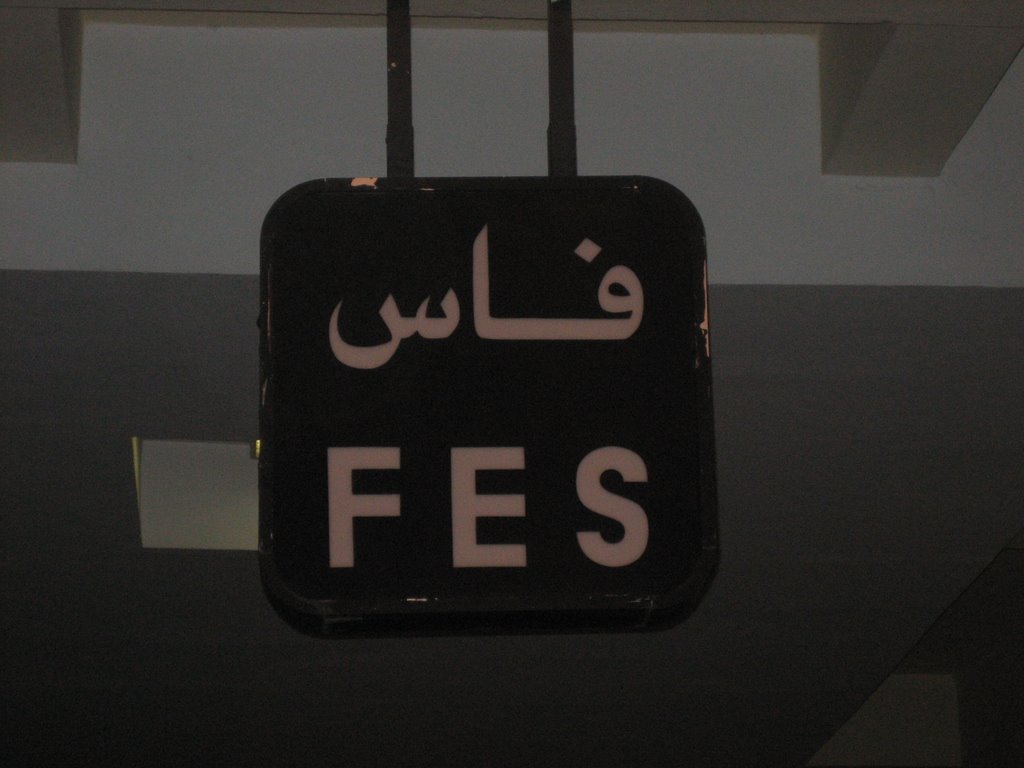
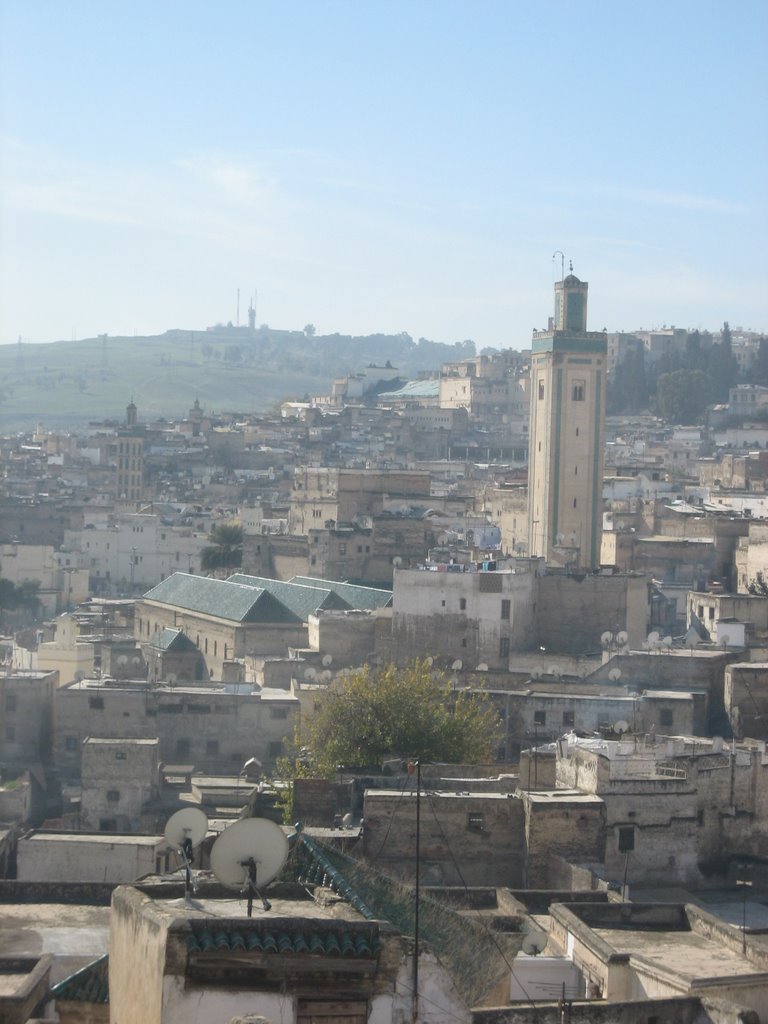
After we left Rabat, we spent three nights in Fes, a city of around one million people about three hours by train east of Rabat. Fes was founded in the late eighth century not long after the conquest of North Africa by the Muslim armies, and portions of the walls surrounding the old city date from 800 years or so ago. It was of course this old city that we came to see. Although parts of the old city seemed to contain only tourists (like us), it was still definitely a working city with schools, mosques, shops, homes and shops and markets patronized only by the locals among the nearly 9500 roads and alleyways--some literally just big enough to walk through--inside its walls. The population inside is around 160,000.

We've visited a dozen or so of these old walled cities in the Middle East and North Africa now, and while Fes isn't number one on our list, we found it to be unique because of its size and because it is built on a hill. The old city is amazingly enormous, something we didn't fully realize until our last day, when we finally got high enough to see everything. It's probably the biggest that we've visited. Also, most of the other old cities we've visited were built on flat ground. However, Fes was built on a hill, a hill that is fairly steep at times, and this simple fact is something about which we both remarked. Below are some pictures of our time there.


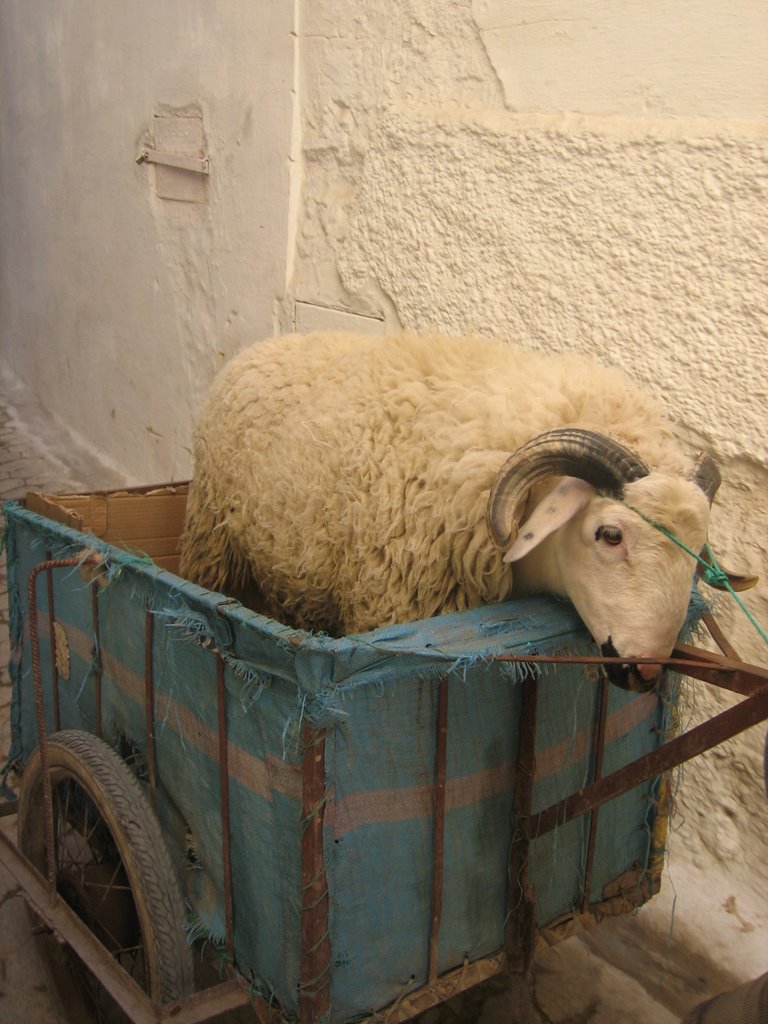
A sheep being led through the streets of Fes.


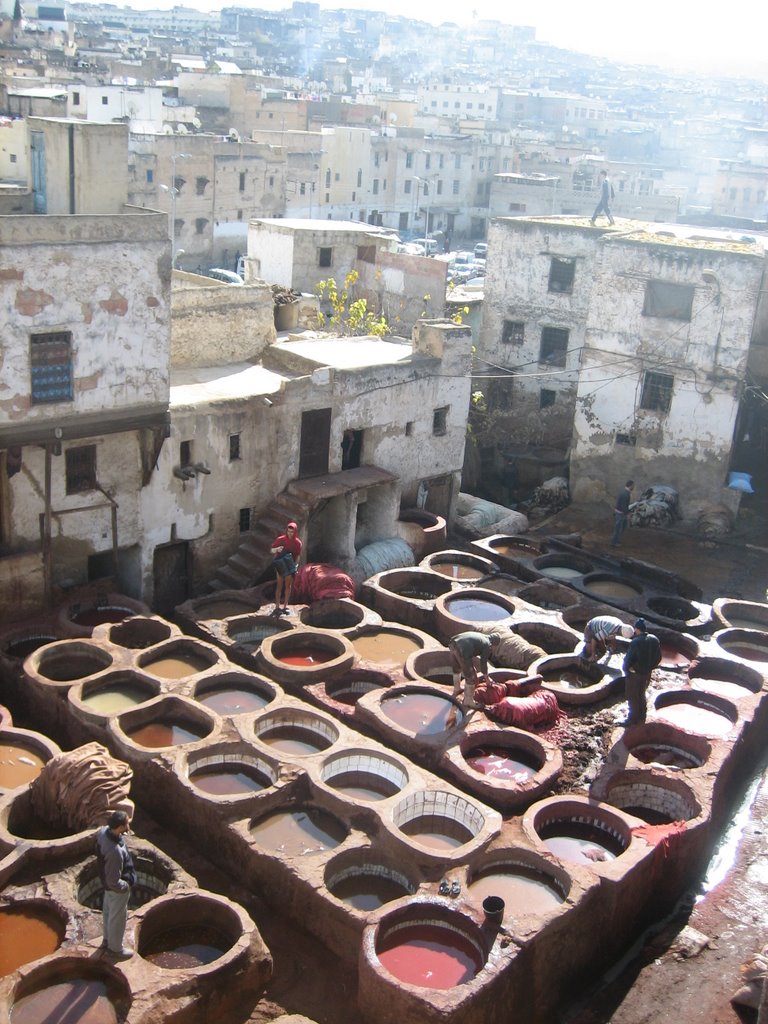
Fes is famous for its leather goods, and this is part of the leather tannery. The vats contain bleach to clean the skins, as well as various different colors for dyeing. The workers just stand in the vats with their pants and shirts rolled up, working with the skins. They also have to deal with the intense stench emitted by the whole process. Have you ever bought a new leather jacket? Think of that smell multiplied by about a thousand.


The interior of a riad--an old home converted into accommodation for tourists--with a fancy central courtyard surrounded by three or four stories of rooms. They are popular places to stay in Fes, and we spent one night here.


Annamarie and Shelley, our friend from Minneapolis, drinking Moroccan mint tea.


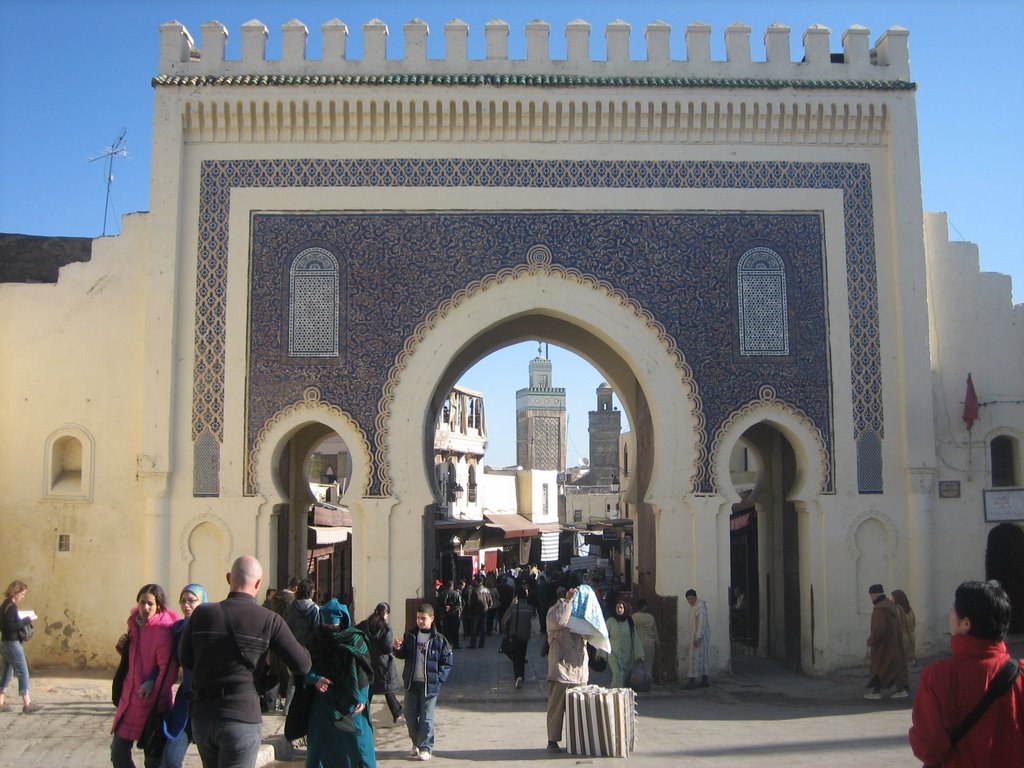
A gate into the old city of Fes, with two minarets in the background.

A door to a home in the old city.


The view from our riad.


A worker at the riad, serving us mint tea on the rooftop.