Showing posts with label Jordanian Life. Show all posts

Tuesday, September 03, 2013

Jordanian Shade

We first wrote the following post in 2006, and repost it every summer with a few changes when the temperatures soar.

It has been a fairly mild summer here in Jordan, without the usual weeks at a time of temperatures in the mid to upper 90s, with occasional forays into the 100s. A lot of people have commented about and noticed this. The past few weeks, though--just as summer is supposed to be ending--summer has instead finally arrived. It is hot, dry and dusty, and many people--if they can--avoid the mid-day heat and simply stay inside. However, because the humidity is not always very high, if you are outside, it is possible to get a decent respite from the heat by walking or resting under the shade of a building, a tree--really, whatever you can find. Yes, it is hot, but finding that elusive shade really can make a big difference in your level of comfort.

Of course many of the stories in the Bible are set in a climate like this, and in my mind the Jordanian heat brings those passages to life. In Genesis, for example, one story has Abraham sitting in his tent "in the heat of the day." When three men come to visit him, he tells them to rest under a tree. These are small details, but because of our time in Jordan I can imagine the afternoon heat experienced by Abraham, as well as the good shade from the heat that the tent and the tree would provide. Also, there is the story of Jonah, who after preaching to the people of Nineveh--a city in what is now northern Iraq, not all that far from us here--left and built himself a little shelter outside the city. It was apparently quite hot, so God raised up a bush to provide shade for Jonah, and to "save him from his discomfort." The next day, though, God caused the bush to die, and Jonah lost his shade. As a result, he became so hot and frustrated that he grew "faint and asked that he might die." Jonah was so hot that he lost his will to live.

Now, I've never been so hot that I wished I were dead, but again, because of our time in Jordan I can imagine how Jonah felt. I think I've felt like that while riding on a windowless bus in the Jordan Valley, the temperature outside of over 100 degrees causing those of us inside to bake, my khaki pants--not shorts, because men must dress modestly too--clinging to the sweat on my legs. I think I've felt like that while walking near the Jordan River, the hot breeze beating down on us like we had just opened a hot oven and all the mighty power of the sun seemingly focused on the straight, naked, part in my hair on the top of my head. I know I've felt like that while trudging Amman for a taxi in the midday summer heat: the streets choked with cars and traffic barely moving, exhaust fumes combining with dust to choke away what's left of the "fresh" air there, a backpack and long pants--modesty, again--serving to cover my body in a sweaty film of claustrophobia, and every taxi maddeningly occupied. Through these--and other--experiences, I can imagine why Jonah was so upset that he lost his shade.

So, as I said, shade can make a big difference, and it is this shade--a shade that can save you from devastating heat--that is good to think about when looking at the imagery used in other parts of the Bible. For instance, Psalm 121 calls God "your shade at your right hand," and Isaiah 25 calls God "a shade from the heat." When I read this, I remember how the other day--when I was outside walking in the heat of the day--I moved immediately into the shadow of a building as soon as I noticed it, how I sought the shade from the heat it would give me. Shade works, and I suppose it is my quick jump into this shade in the heat of a summer day that the various biblical writers had in mind when they referred to God as shade. Like the building, like Jonah's bush, like Abraham's tent, God makes the heat we experience more bearable.

Sunday, July 21, 2013

Meritorious Deeds in Ramadan

In honor of this being the month of Ramadan, we are including several posts describing this most important month. This is the second in the series.

In our previous post we wrote about what is required of Muslims during the month of Ramadan. There are other acts, though, which are not necessarily required, but which are seen as meritorious if they are performed; Muslims can participate in them for an extra blessing or reward from God. Although they aren't necessary to carry out, these acts are part of the fabric of the month, and in some cases are almost as ubiquitous as smokers and coffee drinkers are absent.

The Night Prayer
One of these special deeds is the Night Prayer, called Tarawih in Arabic. Muslims are supposed to pray five times every day, and the night prayer simply involves performing an extra prayer, at some point between the final required prayer of the night and the first of the next day. According to the famous scholar Ibn Taymiyya--whom we introduced in the previous post--"Tarawih is a voluntary prayer by which a true believer intends to seek the pleasure of God and draw near to Him." The idea for the night prayer comes from a saying of Muhammad's, who is reported to have said: “Whoever performed the night prayer in Ramadan with sincere faith and hoping for a reward from God, then all his past sins will be forgiven.”

Charity
Another of these deeds entails the giving of charity. Muslims are already required as part of their faith to give a certain amount in charity, but it is seen to have a higher merit to give during Ramadan. "One of the good deeds of this blessed month of Ramadan is charity and benevolence, which is more virtuous than during the other months," said Ibn Taymiyya. "The goal of giving charity and donations is to attain the pleasure of God." Because of this, during Ramadan those in need of charity are often more noticeable on the streets here in Jordan, as they want to make use of the desire of people to give. We have even received knocks on our door from strangers asking for money during Ramadans past.

Reading of the Qur'an
Muslims also believe in the meritoriousness of increasing their reading of the Qur'an during Ramadan, because they believe it was during Ramadan that the Qur'an was revealed by God to Muhammad. "The blessed month of Ramadan is the month of the Qur’an, in which reciting the Qur’an according to one’s ability is strongly recommended," said Ibn Taymiyya. Because this is so highly recommended, it is very common to walk by a shop and see the shopkeeper behind the counter, silently studying the Qur'an. Just last night at the park, there was a father there, reading bits of his pocket-sized Qur'an between interactions with his child.

Seclusion in the Mosque (I’tikaf) 
Another of the meritorious deeds of Ramadan is secluding oneself in the mosque to spend extra time with God--called I'tikaf in Arabic--during the last ten days of the month. It's a bit like being a monk or nun for a short time. Muhammad was said to have done this every Ramadan. Again, according to Ibn Taymiyya: "One of the special deeds of Ramadan is I’tikaf. Performing I’tikaf means to confine oneself in seclusion in a mosque for the purpose of worshipping God alone, leaving every worldly and personal affair.  The mind of the person who observes I’tikaf concentrates exclusively on the goal of pleasing God.  He is engaged in various types of worship, repentance, and beseeching God’s forgiveness." I don't think this is real common--at least in Jordan--as it is difficult for people to leave behind their lives and responsibilities. Many people do spend more time in mosques during Ramadan, though, even taking their meals there when they can, which is perhaps a type of I'tikaf.

The Night of Power
As mentioned above, Muslims believe the Qur'an was revealed during the month of Ramadan. The Night of Power is the exact night this is believed to have happened, and so it is not just the most special night of Ramadan, but the most special night of the entire year. As a result, there is great merit in spending the night in prayer, reciting the Qur'an and/or in praise of God. Muhammad is reported to have said: “Whoever prays during the Night of Power, with firm belief and expecting a reward for it, his previous sins are forgiven.” If you live close enough to a mosque, it is not uncommon to hear a bustle of activity inside most of the night.

Performing the Minor Pilgrimage
Finally, all Muslims who are able to are required to perform the main pilgrimage with its standard rituals--Hajj--to Mecca in Saudi Arabia at least once in their lifetimes. The 'Umrah/Minor Pilgrimage has slightly different rituals and is not required, but is meritorious to perform. Muslims believe its performance holds even higher merit during Ramadan. Muhammad is reported to have said that “'Umrah in Ramadan is equal (in reward) to Hajj.”

So, there is a lot going on in Ramadan--and a lot going on in the minds of many Muslims--besides fasting. 

Thursday, July 18, 2013

Ramadan

Ramadan began last week. So, in honor of this, the following is the first of several posts describing this very important month. They were posted last year during Ramadan as well.

The Islamic calendar runs on a lunar cycle, and when the new moon was spotted in the clear, steamy, summer sky here last Monday evening, the month of Ramadan began. It will continue until the next new moon is sighted, for about 30 days. Ramadan is one of the five, basic, famous "pillars" of Islam--the others being to declare that "there is no god but God, and Muhammad is God's prophet", pray five times daily, give a certain amount in charity and perform the pilgrimage to Mecca. Ramadan is the month of fasting, and during Ramadan Muslims are required to abstain from food, drink, sexual relations and smoking from sunup to sundown. This is the basic duty of the pillar of the Ramadan fast. Ibn Taymiyya (1263-1328) is a famous Muslim scholar born near the border with Syria in what is now Turkey. He spent the last years of his life in Damascus, and had a significant influence on generations of Muslim thinkers, right up to the present day. "Fasting is to abstain from eating, drinking, sexual intercourse, and the rest of what breaks the fast from dawn until sunset, with the intention of drawing closer to God," he said. "Fasting during the lunar month of Ramadan is obligatory... It is mandatory for every Muslim to fast during Ramadan and it is one of the well established pillars of the religion."

Fasting is actually not referenced often in the Qur’an. The Qur'an mentions general fasting a few times, but the specific obligation of the Ramadan fast is mentioned only once. This occurs in Surah (chapter) 2, beginning with verses 183-185, where fasting is commanded, and travelers and the sick are exempted:

O you who believe! Fasting is prescribed to you as it was prescribed to those before you, that you may (learn) self-restraint. (Fasting) for a fixed number of days; but if any of you is ill, or on a journey, the prescribed number (Should be made up) from days later... Ramadan is the (month) in which was sent down the Qur'an, as a guide to mankind, also clear (Signs) for guidance and judgment (Between right and wrong). So every one of you who is present (at his home) during that month should spend it in fasting, but if any one is ill, or on a journey, the prescribed period (Should be made up) by days later. God intends every facility for you; He does not want to put to difficulties. (He wants you) to complete the prescribed period, and to glorify Him in that He has guided you; and perchance you shall be grateful. 

Two verses later the parameters of this fast are set out. As mentioned above, it is to last from sunup to sundown, and it is to involve not just abstinence from food, but from drink and sex too.

Permitted to you, on the night of the fasts, is the approach to your wives. They are your garments and you are their garments. God knows what you used to do secretly among yourselves, but He turned to you and forgave you; so now associate with them, and seek what God has ordained for you, and eat and drink, until the white thread of dawn appear to you distinct from its black thread. Then complete your fast until the night appears; but do not associate with your wives while you are in retreat in the mosques. Those are Limits (set by) God. Approach not nigh thereto. Thus does God make clear His Signs to men: that they may learn self-restraint.

As you can see, beyond the simple obligation to fast during Ramadan, some of the details surrounding it are covered by the above passages. Other details are not, though; these details are instead found in what is called the Hadith, which are a mixture of collections of various sayings of Muhammad and reports from his companions regarding actions they saw him take. For example, the following report from one of the most important collections of this literature addresses the question of eating a meal just before the sunrise in the early hours of the morning, which the great majority of fasting people here in Jordan do:

Anas reported God's Messenger as saying: "Take meal a little before dawn, for there is a blessing in taking meal at that time."

Another addresses the question of fasting continuously, without breaking to eat.

Ibn 'Umar said that the Apostle of God forbade uninterrupted fasting. They (some of the Companions) said: "You yourself fast uninterruptedly," whereupon he said: "I am not like you. I am fed and supplied drink (by God)." 

And since sex isn't allowed, what about kissing? Another report deals with that issue.

'Aisha [one of Muhammad's wives] said that the Messenger of God kissed one of his wives while he was fasting, and then she ('Aisha) smiled (as she narrated). 

With the help of the Qur'an and many, many more reports like these from the Hadith, these details are then further explicated in Islamic law. A well known manual of Islamic law from the 14th century includes in the section on the Ramadan fast such headings as "At What Age a Child Fasts," "Conditions Under Which Travel Permits Not Fasting," "Things Which Invalidate the Fast," "Things That do Not Break the Fast," "Making Up Missed Fast Days," "Those Not Obliged to Fast Ramadan" and "Involuntary Acts That Break the Fast".

It is important to note that fasting during Ramadan is not supposed to be all about avoiding food, drink and sex. Muslims are supposed to avoid bad behavior and work to have good intentions and attitudes too. The following two hadiths illustrate this point.

The Prophet said, "Whoever does not give up forged speech and evil actions, God is not in need of his leaving his food and drink."

God's Apostle said, "Fasting is a shield (or a screen or a shelter). So, the person observing fasting should avoid sexual relation with his wife and should not behave foolishly and impudently, and if somebody fights with him or abuses him, he should tell him twice, 'I am fasting.'" The Prophet added, "By Him in Whose Hands my soul is, the smell coming out from the mouth of a fasting person is better in the sight of God than the smell of musk. (God says about the fasting person), 'He has left his food, drink and desires for my sake. The fast is for me. So I will reward (the fasting person) for it, and the reward of good deeds is multiplied ten times.'"

Commenting on this idea of a fasting person being better than the scent of musk, the 14th century Syrian scholar Ibn Qayyim al-Jawziyya--who was a student of Ibn Taymiyya--delineates the characteristics of a true fasting person.

The main question is who really keeps the fast? It should be kept in mind that while fasting, man’s limbs should be free from sins, tongue from lies, bias and false language, stomach from food and drinks and secret organs from union. He will not speak anything that may spoil his fast, he will not do anything which may invalidate his fast. He will speak only good things and will do only useful things. Therefore talks and deeds of a fasting man are like the scent one smells while sitting next to the bearer of musk. Similarly anybody who sits with the fasting person is benefited from his talks and deeds and is saved from lies, abuses of mouth and limbs. This is the fast desired by the Shariah [Islamic law], not mere refraining from food and drink… Therefore, true fast is that limbs fast from sin and stomach fasts from food and drink, because as food and drink break and spoil the fast, sin also spoils the reward and fruit of the fast and makes him as he had not fasted at all. 

So Muslims must fast from sunup to sundown during the month of Ramadan, and possess a good, sweet-smelling spirit and attitude. These are the basic duties of Ramadan.

Saturday, April 20, 2013

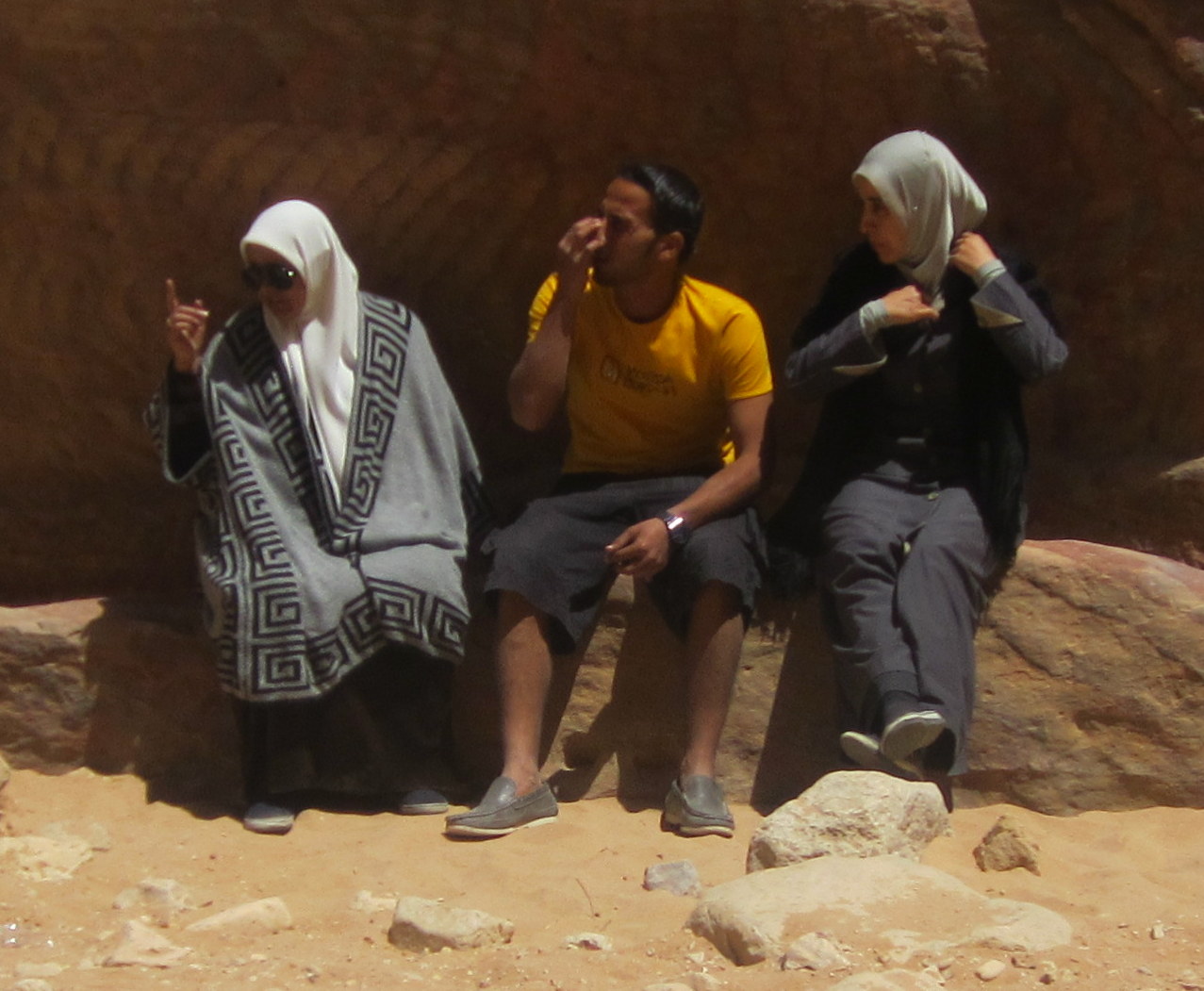
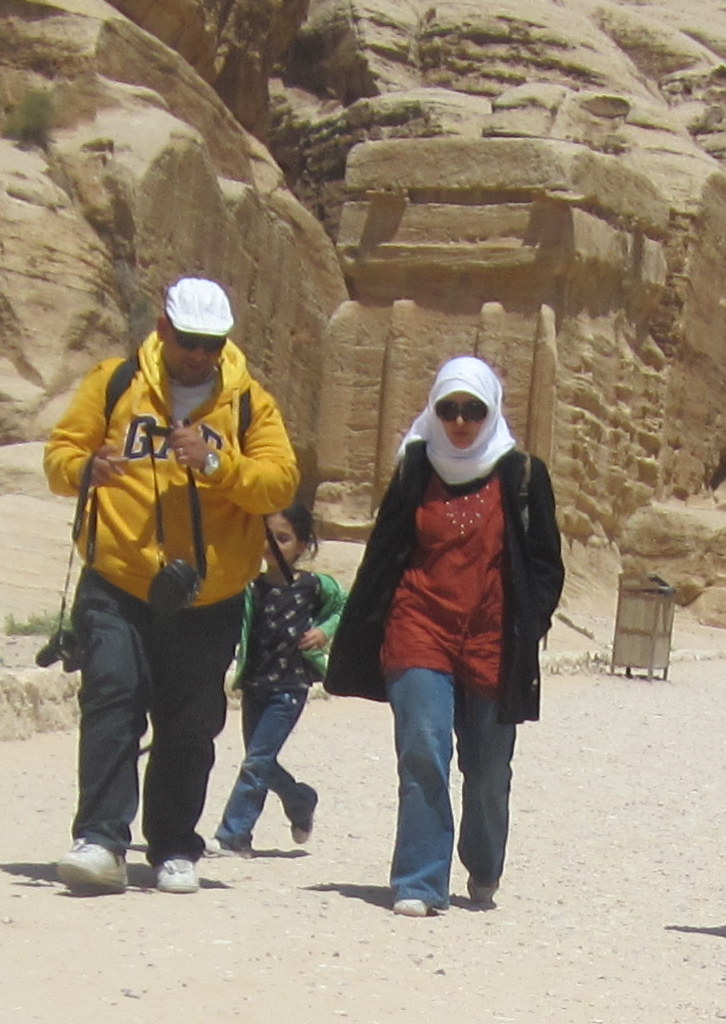
People of Petra

Today we went to Petra with some friends who are visiting us. However, since we've been there six or seven times, I didn't take any pictures of the city meticulously carved into the sides of the mountains, or its beautiful natural surroundings. There were a ton of tourists there, though--far, far more than I had ever seen before--so instead I snapped pictures of them, the people of Petra. A lot of strangers have taken my picture over the years here, so today, I decided it was time for me to do the same.


Wednesday, April 03, 2013

No, I Don't Like Your Hair

Before we came to Jordan seven years ago some people suggested I cut my hair. You know, to fit in better, so people in this conservative society wouldn't be turned off by my long locks. Anyway, I didn't cut it, and I've never had any problem. Sure, I get a few more stares than the average white guy here, but I did back at home too, especially from the occasional anxious store clerk who is certain I look like a shoplifter. I've never gotten the sense that people wouldn't talk to me or distrusted me here because I looked different. I have friends young and old, and with varying degrees of religiosity, and the strangers I meet every day are perfectly willing to talk to me. My long hair, though, does set me apart aesthetically from nearly everyone in Jordan. That is true. Because of that, I am every so often forced to answer questions about it, usually from a kid. Such an inquisition took place yesterday, while I was innocently waiting for my shawarma. My inquisitor was around twelve or thirteen years old, and he took a keen interest in how I looked while waiting for his shawarma too. The following is the English translation of our conversation.

Kid: Why is your hair like that?
Me: Why not?
Kid: Why is your hair like that?
Me: Why not? Why is your hair like that?
Pause, confusion.
Kid: Why is your hair like that?
Me: Why is your hair like that? It's too short.
Kid: What?
Me: It's too short.
Pause, again.
Kid: Why is your hair like that?
Me: Why? You don't like it?
Kid: No.
Me: What? Is it prohibited?
Kid: Yes.


I smiled wide, and laughed, and began to consider my next response. But, alas, his shawarma was ready, and he grabbed it and walked away, leaving me alone, with my forbidden hair.

Sunday, March 17, 2013

What Goes Up...

The crackle of not too distant--more than likely celebratory--gunfire as I sat up on our rooftop a few nights ago reminded me of this video from Saudi Arabia I saw recently. We like to commemorate happy occasions by unloading bullets into the sky here in Jordan, and I've found bullets on our old street and on the ground at a nearby park that I'm pretty sure didn't come from drive-bys. I'm also pretty sure that anyone in the area of these guys had to head for cover.


Thursday, March 14, 2013

Wadi Yabis

Recently we took a hike through Wadi Yabis, a valley--wadi means valley in Arabic--that starts high in the mountains of the north and winds its way down to the Jordan Valley, the lowest point on Earth. Located in an area said to have been the homeland of the biblical Prophet Elijah, the valley features a rare perennial spring that we enjoyed walking through, thousand year old olive trees and the elusive Black Iris--Jordan's national flower--which I finally saw in person for the first time. Because it is spring now, the surrounding hillsides were also covered in a thick green that will disappear by the beginning of the summer.


Tuesday, February 12, 2013

Webcams Around Jordan

Jordan just installed 24/7 webcams at the Citadel--which we wrote about recently--and at Petra, the Dead Sea and the Red Sea coastal city of Aqaba, plus one of the Amman skyline. We don't know if the Amman view ever changes, but our apartment is just five minutes up the road from what is currently showing. Click this link for the article in the Jordan Times about the initiative, and click here to go right to the webcams. According to the Jordan Tourism Board (JTB), "Jordan is the first country in the Middle East to install tourism webcams."

Sunday, February 10, 2013

Jerash

The Roman ruins of Jerash are about a 30 minute drive north from our home in Amman. Widely considered the most extensive and best preserved Roman city in the region, remains there include a huge arched entrance, a long colonnaded street, a colonnaded oval forum, two big temples, a hippodrome and two amphitheaters where concerts take place still today. It is Jordan's second most popular tourist attraction, after Petra. Like the Citadel, which we wrote about a couple of weeks ago, it's also a great place to run around, which we did recently.


Friday, January 25, 2013

The Citadel: Our Local Park

Amman has very little green space and we live in a first floor apartment, so we don't have a lot of options for outside play, or for just enjoying the outdoors in general. What Amman does have, though--and Jordan in general--are amazing, ancient archaeological sites. These act as our parks, and we take occasional trips to those nearby when we want to spend a nice day outside.

Recently we went to the Citadel, which is a hill overlooking downtown Amman, which we can see every day from the roof of our building, or from the end of our street. The Citadel lays claim to being one of the oldest continuously inhabited places in the world, as evidence there reveals the presence of settlement activity stretching to over 7000 years ago. It is said to have been the location of the capital of the Ammonites--frequent adversaries of the Israelites in the Old Testament--where King David sent Uriah the Hittite to his death to cover up his affair with Bathsheba. The remaining ruins, though, are mostly more recent, including a Roman Temple to Hercules, a Byzantine era basillica, and a mosque, water cistern and palace complex built by the Umayyads, the first Islamic dynasty, who ruled from 661-750. This is the Citadel--our local park.


Tuesday, January 22, 2013

Starbucksification

My mind was blown this morning when I stopped by our neighborhood coffee stand and my Turkish Coffee was handed to me in a lidded styrofoam cup. Yes, that's right, I was given a cup with a lid on it, and there it is, plainly pictured on the left. "Big deal," you say, but this is mind blowing to me because I have never--not once in almost seven years of living here--seen Turkish Coffee to go served in a cup with a lid. You get plastic, or you get styrofoam, and you do not get a lid. You certainly don't bring your own cup. I actually did a double take when I saw it, staring hard at the lid as if I had never seen such a device before. As I said, I literally haven't in that context, and so I was shocked. It's a cultural thing in my mind. Turkish Coffee is supposed to come in little, open faced cups, and you are supposed to spill some as you walk or drive. No more, at least at my coffee stand. It's Starbucksification.

Tuesday, January 15, 2013

All That Water Means No Water

All that rain and snow last week wreaked havoc on the water distribution system here in Amman.  The heavy rainfall and flooding decreased water quality levels and some pipes were swept away in the floods, and then, after it snowed, bulldozers used to clear the snow damaged some other water pipes. As a result, pumping from the water sources that supply Amman has been suspended for eight days now. We seem to have been affected by this issue, as our own tanks are much less full than usual. So, we've had to curtail our water usage. It's ironic I suppose: All that water means no water. You can read about it here in the Jordan Times. Wednesday is our usual water delivery day, so we hope to have enough in our tanks until then. We hope it comes then too. 

Thursday, January 10, 2013

Snow Day

Three days of solid rain turned to snow last night and today, as the temperatures in Amman dipped perilously close to freezing. As I write this, in fact, the temperature in Amman is 36 degrees Fahrenheit, which is one degree warmer than Minneapolis. After it finally stopped around a foot of snow had fallen on parts of Jordan, with our area of Amman--we live in the lower elevations--having received 4 to 5 inches. The higher parts of the city are mere minutes away, and no doubt they received the higher amounts reported. It was a very big event for the region, and a local meteorologist called it the "fiercest storm to hit the Mideast in the month of January in at least 30 years." Of course the whole city basically shut down--even our dependable local market was closed--but many people took the chance to stroll through their neighborhood, build snowmen and throw snowballs at each other, strangers included. After several days of driving rain and now snow, our apartment seems to have reached some kind of a climatic breaking point, with water breaking through and collecting on the floor in our front sunroom and back porch, entire walls wet from condensation, and finally, this morning, frozen pipes and the resulting partially functioning plumbing. Below are some pictures of our rare snow day.


The bottom four pictures are not ours, but were taken from the Facebook page "Diwan Baladna." They are of various places in Amman, except for the last picture, which is from Wadi Rum, the famous desert in the southern part of the country.